
- November 22, 2026
- drsfurtimann
- 0
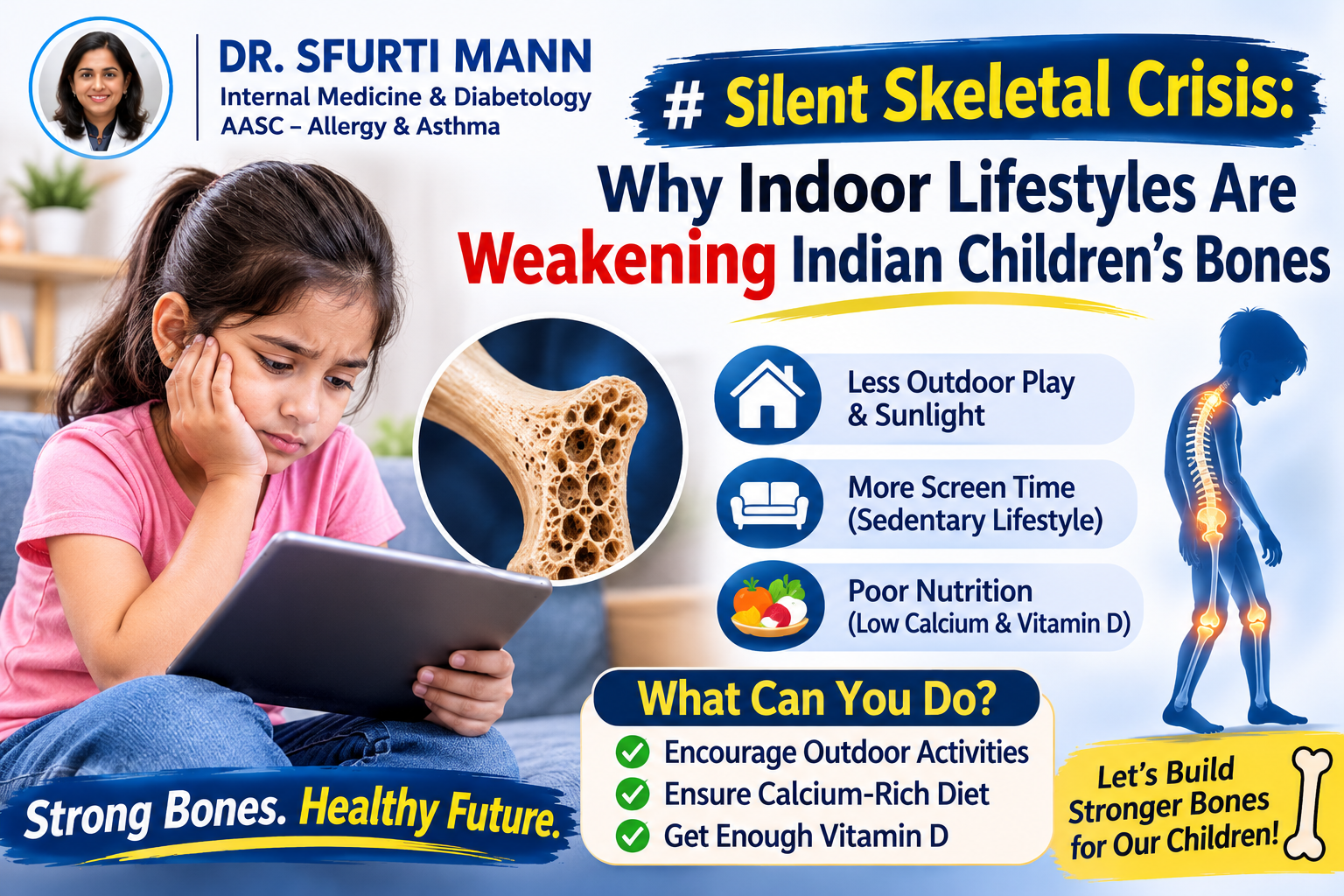
Children build most of their lifelong bone strength before they reach adulthood. Yet today’s children spend far more time indoors, in classrooms, at home and in front of screens than earlier generations did. Doctors are now raising concern that indoor habits, limited sunlight and poor nutrition may be quietly affecting bone health during the most important growth years.
As a general physician in Gurgaon, Dr. Sfurti Mann says the most worrying part is that bone weakness often develops without early symptoms. That is why parents need to know what to look for, and what to do early.
What Is the Skeletal Crisis?
The term refers to a growing trend of poor bone density and bone problems among children in India. Doctors point to two main causes: a lifestyle with far less outdoor activity, and diets that lack key nutrients. Together, these can stop children from reaching their best possible peak bone mass.
It is worth knowing that skeletal crisis is not a standard medical diagnosis. As Dr. Chaitanya Challa, Senior Consultant in Internal Medicine at CARE Hospitals, Hyderabad, explains, bone problems in children can arise when growing bones do not get enough nutrition, physical activity or nutrients such as calcium and vitamin D. If significant deficiencies are left untreated, they can affect bone mineralisation, growth and strength.
Back Pain and Bone Problems Are Starting Younger
The Indian Association of Physiotherapists has flagged a reported 40 percent rise in musculoskeletal problems among schoolchildren, pointing to sedentary routines and poor movement habits. The association’s president has stressed that back pain does not start in old age, and has called for a shift from treating problems after they appear to preventing them through early education, fitness and suitable physiotherapy.
Sunlight and Vitamin D: Finding the Right Balance
Sunlight is the main natural source of vitamin D, which helps the body absorb calcium. However, Dr. Sfurti Mann points out that there is no single rule for how long a child should stay in the sun. The need depends on skin tone, season and time of day.
Rather than following a fixed number of minutes, aim for regular outdoor play as part of a child’s daily routine, and ask your doctor what suits your child.
Calcium and Protein: What To Put on the Plate
Food plays a big part in building bones. Dr. Sfurti Mann recommends including:
- Calcium-rich foods such as milk, curd, paneer and ragi
- Protein sources such as eggs, pulses, lentils and nuts, to support growth of the skeletal frame
Children who are fussy eaters or who eat a limited diet may miss out on these nutrients. If you are worried about nutrition in general, our page on anemia explains how deficiencies can affect growth and energy.
Do Children Need Vitamin D Supplements?
Sometimes. Vitamin D supplements may be needed when sunlight and food do not provide enough. But they should only be given on a doctor’s advice. Giving supplements or any medicine without guidance carries its own risks, as we explain in our blog on self-medication.
Why Exercise Matters for Bone Strength
Movement is essential for building stronger bones. Weight-bearing activity helps because gravity works against the body, and bones respond by becoming stronger. Good options include:
- Skipping rope
- Running
- Hopping and jumping
- Outdoor sports such as football and basketball
Children aged 6 to 17 should aim for at least 60 minutes of physical activity every day, including bone-strengthening exercises three times a week. Young children do well with active outdoor play.
A few more tips:
- Encourage a variety of activities rather than only high-intensity training
- Make sure children get enough rest and nutrition
- Choose the right footwear to help prevent injuries
Inactivity also raises the risk of weight gain in childhood. You can read about this on our page on obesity treatment in Gurgaon.
Warning Signs Parents Should Not Ignore
Bone health problems in children may not show obvious symptoms early on. See a doctor if your child has:
- Frequent fractures, or fractures after minor falls
- Persistent, unexplained bone or joint pain
- Delayed growth
- Muscle weakness
- Difficulty walking or an abnormal walking pattern
- Signs of rickets in young children, such as bowed legs or swollen wrists
These signs do not always mean a bone disorder, but they should never be ignored.
How Is a Child’s Bone Health Assessed?
A doctor will look at the child’s growth pattern, diet, physical activity, medical history and fracture history. If needed, blood tests can check:
- Vitamin D
- Calcium
- Phosphorus
- Alkaline phosphatase
Bone density scans are generally not needed for healthy children. They may be useful for children who have repeated fractures or a long-term illness. Understanding your child’s results also matters, and our blog on what borderline test results mean can help you read them with confidence.
A Simple Bone Health Checklist for Parents
- Plan daily outdoor time, not just indoor activity
- Include milk, curd, paneer or ragi in meals
- Add protein such as eggs, pulses, lentils and nuts
- Limit long hours of screen time and sitting
- Aim for 60 minutes of activity every day
- Check growth and eating habits at regular intervals
- Ask a doctor before starting any supplement
Common Questions About Children’s Bone Health
Q. How much sunlight does my child need?
There is no single rule. It depends on skin tone, season and time of day, so ask your doctor for advice that suits your child.
Q. Which foods are best for strong bones in children?
Milk, curd, paneer and ragi for calcium, and eggs, pulses, lentils and nuts for protein.
Q. Does my child need a vitamin D supplement?
Only if a doctor advises it, usually after checking diet, sunlight exposure and, if needed, a blood test.
Q. How much exercise do children need?
Children aged 6 to 17 should do at least 60 minutes of physical activity daily, including bone-strengthening exercises three times a week.
Q. Is a bone density scan necessary for my child?
Not for healthy children. It may help if a child has repeated fractures or a chronic illness.
Q. When should I see a doctor?
If your child has persistent bone pain, delayed growth, weakness, walking problems or fractures after minor injuries.
Talk to a Doctor You Can Trust
If you are worried about your child’s growth, diet or bone health, early evaluation helps prevent complications. Learn more about Dr. Sfurti Mann, see what patients say about her care or explore her full range of general physician services.
Visit Ananta Health Clinic in Sector 66, Gurgaon or book an appointment today. You can also contact the clinic with any questions. Strong bones are built in childhood, and a few healthy habits today can protect your child for life.
Related reading:
- What borderline test results mean
- Smart foods for type 2 diabetes
- Why hand hygiene matters
- Silent diabetes symptoms people ignore
- More blogs
Reference:
NDTV. Silent Skeletal Crisis: Why Indoor Lifestyles Are Weakening Indian Children’s Bones