
- November 22, 2026
- drsfurtimann
- 0
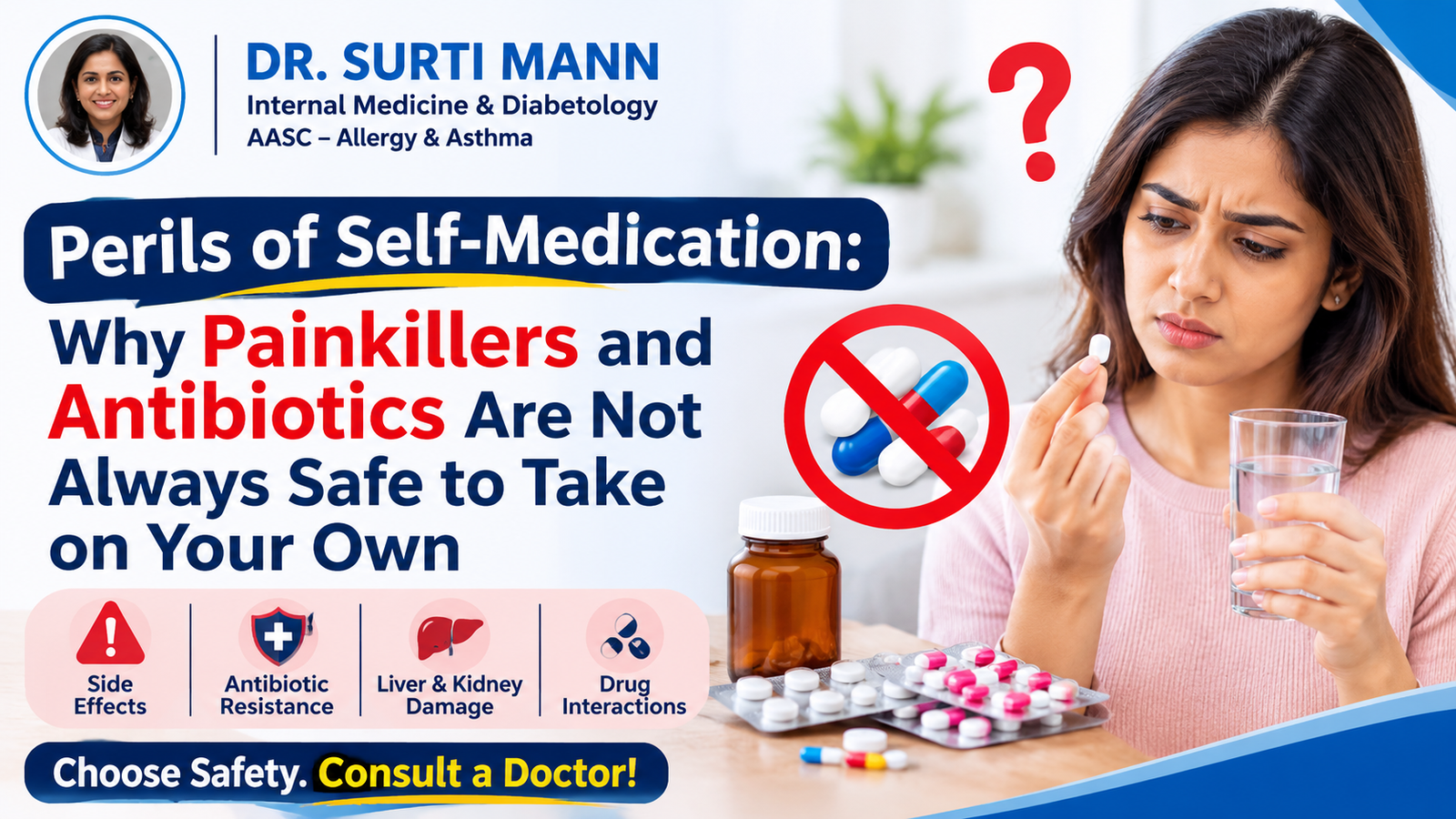
A headache, a backache or a fever is often enough to send us to the medicine cupboard. Sometimes it is a painkiller a friend recommended, an antibiotic prescribed earlier or a tablet that worked last time. The relief may be quick, but taking medicines without medical advice carries risks that are easy to overlook.
As a general physician in Gurgaon, Dr. Sfurti Mann regularly sees the results of this habit. Her message is simple: a commonly used medicine is not automatically harmless.
Why Is Self-Medication So Common?
A 2025 systematic review of 66 Indian studies, covering 29,873 participants, estimated that about 64.4 percent of people self-medicate. Minor illnesses, lack of time and financial concerns were among the main reasons. Painkillers, fever medicines and antibiotics were the most commonly used. This figure combines studies from different groups and settings, so it is not a single nationwide survey.
Dr. Sfurti Mann believes familiarity is part of the problem. One of the biggest misconceptions, she explains, is that a medicine in common use must be safe. She was shocked once to meet a patient who had been taking an NSAID called indomethacin every day for a full year.
What Has CDSCO Said About This?
In a circular dated September 21, 2026, the Central Drugs Standard Control Organisation cautioned the public, doctors, pharmacies, retailers, distributors and hospitals against the indiscriminate use of NSAIDs and antibiotics. The circular points to their possible role in causing and worsening chronic kidney disease.
It also reminds everyone that most NSAIDs fall under Schedule H and most antibiotics under Schedule H1 of the Drugs Rules. These need a prescription and medical supervision, and should be used only when clinically needed, at the right dose and for the right duration.
How Painkillers Can Harm the Kidneys
Painkillers such as ibuprofen, diclofenac and naproxen belong to a group called non-steroidal anti-inflammatory drugs, or NSAIDs. They work well, but they also reduce the substances that help maintain blood flow to the kidneys. In vulnerable people, this can lower kidney filtration and cause acute kidney injury.
Nephrologists report seeing patients whose kidney function dropped suddenly after they bought a painkiller without a prescription for back pain, toothache, arthritis or fever. Over-the-counter does not mean risk-free.
When Does the Risk Increase?
The risk rises with higher doses and longer use. Extra caution is needed if you:
- Have kidney disease, diabetes, high blood pressure, heart failure or liver disease
- Are an older adult
- Are dehydrated, for example from vomiting, diarrhoea, fever or poor fluid intake
Patients with diabetes should be especially careful, and our page on diabetes management explains how to protect kidney health over the long term.
Combinations matter too. People taking certain blood pressure medicines along with diuretics can face a higher risk of kidney injury if they add an NSAID without advice. Some people also take the same active ingredient twice by using more than one pain or cold remedy.
Kidney damage does not always show obvious symptoms. Some patients notice reduced urine output, swelling, sudden weight gain or breathlessness, while others notice very little. Kidney function can improve once the medicine is stopped and the cause is treated, but recovery is not guaranteed, especially after severe injury or in people who already have chronic kidney disease.
Other Effects of Self-Medication
The harm is not limited to the kidneys. Dr. Sfurti Mann points out that frequent or inappropriate painkiller use can irritate the stomach lining and raise the risk of ulcers and gastrointestinal bleeding. If you already have stomach trouble, our page on gastroenteritis explains when to seek care. Some medicines can also injure the liver, particularly in excessive doses or when several products contain the same ingredient.
The Problem With Taking Antibiotics on Your Own
Antibiotics are not general medicines for fever, cold or body ache. Many common respiratory infections are caused by viruses, and antibiotics do not work against viruses.
A community study in south-east Delhi found that 35 percent of 200 participants had self-medicated with antibiotics. Among them, 75 percent got the medicine from pharmacies, and fever, cold and flu symptoms were the usual reasons.
Misuse and overuse of antibiotics is a major driver of antimicrobial resistance, which means germs stop responding to medicines that once worked. This makes some infections harder and more expensive to treat. Antibiotics can also cause allergic reactions, stomach problems, drug interactions and, in some cases, kidney or liver damage.
Taking an antibiotic before the right tests can also make a diagnosis harder. A fever that lasts, for example, may need proper investigation for conditions such as typhoid instead of a guess with a leftover strip.
Why Hiding a Symptom Is Not the Same as Treating It
Self-medication can mask symptoms without treating the cause. Persistent back pain, a recurring headache or repeated abdominal pain needs a medical assessment, not another tablet. As Dr. Sfurti Mann puts it, we have become very comfortable with the idea of the quick fix, but making a symptom disappear does not mean the problem has been treated.
What You Should Do Instead
Neither painkillers nor antibiotics are bad medicines. They remain important when prescribed properly. The concern is taking them repeatedly, in the wrong dose or for the wrong reason. Keep these steps in mind:
- Check the ingredients before taking a familiar tablet.
- Avoid combining more than one NSAID or more than one product with the same active ingredient.
- Do not use leftover or old prescriptions. Check expiry dates too, as explained in our blog on expired medicines.
- Drink enough fluids, especially during fever, vomiting or diarrhoea.
- See a doctor if pain lasts more than a few days or keeps returning.
- Take antibiotics only when prescribed for a proper reason, and finish the course as directed.
- If you have kidney disease or any chronic condition, speak to a doctor before taking any NSAID.
Common Questions About Self-Medication
Q. Is it safe to take a painkiller once in a while?
For most healthy adults, an occasional dose at the right strength is usually fine. The risk grows with repeated use, higher doses and existing health conditions.
Q. Can painkillers damage the kidneys?
Yes. NSAIDs can reduce blood flow to the kidneys and cause acute kidney injury, especially in people who are dehydrated or already have health problems.
Q. Can I take an antibiotic for a cold or fever?
Not without advice. Most colds and many fevers are caused by viruses, so antibiotics do not help and can cause harm.
Q. What is antibiotic resistance?
It happens when germs become resistant to medicines that used to kill them, making infections harder to treat.
Q. When should I see a doctor instead of taking a tablet?
If pain or fever lasts beyond a few days, keeps returning, or comes with swelling, reduced urine, breathlessness or vomiting.
Talk to a Doctor You Can Trust
If you rely on painkillers often, are unsure about a medicine or want a review of what you take, a short consultation can protect your health. Learn more about Dr. Sfurti Mann, see what patients say about her care or explore her full range of general physician services.
Visit Ananta Health Clinic in Sector 66, Gurgaon or book an appointment today. You can also contact the clinic with any question. A quick fix may bring relief today, but the right treatment protects you for years.
Related reading:
- Expired medicines and repackaged drugs: what you should know
- What borderline test results mean
- Five precautions for diabetes patients during the H1N1 surge
- Silent diabetes symptoms people ignore
- More blogs
Reference:
Perils of self-medication. Source article: – https://www.thip.media/health-stories/health-feature-stories/perils-of-self-medication/154811/