
- July 20, 2026
- drsfurtimann
- 0
Water makes up most of your body. It helps your organs work, keeps your energy levels steady and supports every system inside you. When you lose more fluid than you take in, your body becomes dehydrated. This can happen at any time of the year, not just in summer.
Many people do not notice dehydration until it becomes severe. The signs can be mild at first and easy to miss. Knowing what to look for can help you act early and avoid complications.
In this blog, we explain the most common signs of dehydration, how it feels, and when you should speak to a doctor. If you are looking for a trusted General Physician in Gurgaon to guide you through your symptoms, Dr. Sfurti Mann can help.
What Is Dehydration?
Dehydration happens when your body loses more water than it takes in. This affects your blood volume, body temperature and how well your organs function. It can happen due to illness, sweating, hot weather, not drinking enough water, or certain health conditions.
Dehydration can range from mild to severe. Mild dehydration is common and easy to fix. Severe dehydration is a medical emergency and needs urgent care.
Common Signs and Symptoms of Dehydration
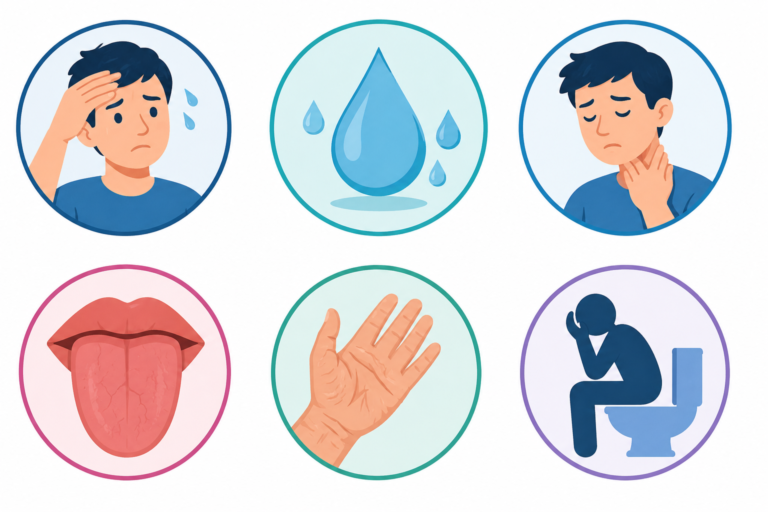
The most common signs of dehydration include:
- Thirst
- Dry mouth
- Dark yellow or amber-colored urine
- Reduced urination
- Dry skin
- Headache
- Tiredness
- Dizziness
- Confusion in severe cases
If you notice several of these signs together, your body may be telling you it needs more fluids.
How to Tell If You Are Dehydrated
One of the easiest ways to check for dehydration is to look at your urine color. Pale yellow urine usually means you are well hydrated. Dark yellow or amber urine is a sign that your body is holding on to water because it does not have enough.
Other simple signs to watch for include a dry mouth, cracked lips, low energy and infrequent urination. If you feel unusually tired or foggy without any clear reason, dehydration could be the cause.
Signs of Dehydration in Adults
In adults, dehydration often shows up as fatigue, headache, dizziness and dry skin. Some adults may also notice muscle cramps or a fast heartbeat. These signs can worsen quickly if fluids are not replaced, especially in people with diabetes, kidney disease or heart conditions.
If you manage a condition like diabetes or hypertension, staying hydrated is even more important, since dehydration can affect blood sugar and blood pressure levels.
Symptoms of Dehydration in Men and Women
Dehydration affects men and women in mostly similar ways. Both may experience thirst, dry mouth, fatigue and dark urine. However, some differences can appear.
Women may notice dehydration affecting menstrual symptoms, headaches or mood changes more clearly. Men, especially those who are physically active or work outdoors, may lose fluids faster through sweat and may notice muscle cramps or a rapid heartbeat sooner.
Regardless of gender, the basic rule stays the same. If you feel thirsty, tired or notice dark urine, it is time to drink more water.
What Does Dehydration Feel Like?
Dehydration does not always feel dramatic. Mild dehydration can feel like general tiredness, a slight headache or dry lips. As it becomes more serious, you may feel dizzy, weak or find it hard to concentrate.
Some people describe it as feeling foggy or slow, almost like they are coming down with something. If these feelings go away after drinking water, dehydration was likely the cause.
Can Dehydration Cause Nausea?
Yes, dehydration can cause nausea. When your body loses fluids, it can affect your digestive system and blood pressure, which may lead to a queasy or unsettled stomach. This is especially common after vomiting, diarrhea or heavy sweating without enough fluid replacement.
Does Dehydration Cause Diarrhea?
Dehydration itself does not directly cause diarrhea. It is usually the other way around. Diarrhea causes your body to lose large amounts of fluid quickly, which leads to dehydration. If diarrhea continues for more than a day or two, dehydration can become severe and needs medical attention.
Can Dehydration Cause a Fever?
Mild dehydration does not usually cause a true fever, but it can raise your body temperature slightly, making you feel warmer than usual. Severe dehydration, especially in children and older adults, can sometimes lead to a higher body temperature. If you have a genuine fever along with signs of dehydration, it is best to consult a doctor to check for an underlying infection.
Does Dehydration Make You Tired?
Yes, dehydration is a common and often overlooked cause of tiredness. When fluid levels drop, blood volume decreases too. This makes it harder for oxygen and nutrients to reach your muscles and brain, leaving you feeling sluggish, low on energy or mentally slow.
If you often feel tired despite sleeping well, try increasing your water intake first before assuming it is something else.
Dehydration, Heart Rate and Blood Pressure
Dehydration can affect your heart rate and blood pressure. When fluid levels drop, blood volume decreases, which can cause your heart to beat faster to keep blood flowing properly. This is why some people notice a rapid heartbeat when dehydrated.
Dehydration can also cause blood pressure to drop, especially when standing up quickly, leading to dizziness or lightheadedness. In some cases, ongoing dehydration can also strain the heart over time. If you have a history of high cholesterol or heart-related concerns, staying hydrated is an important part of managing your overall health.
Treating Dehydration: Pedialyte, ORS and IV Fluids
For mild dehydration, drinking water is usually enough. For more noticeable fluid loss, oral rehydration solutions, commonly known as ORS, can help restore lost water, salts and minerals faster than water alone.
Pedialyte is often used for children but is also used by adults for mild to moderate dehydration, especially after vomiting, diarrhea or intense physical activity. It helps replace electrolytes like sodium and potassium along with fluids.
In cases of severe dehydration, when a person cannot keep fluids down or shows signs like confusion, a very fast heartbeat or extreme weakness, IV fluids may be needed. This is usually given under medical supervision, either in a clinic or hospital setting, to restore fluid balance quickly and safely.
When Should You See a Doctor?
You should consult a doctor if you notice:
- Dizziness or fainting
- A very fast heartbeat
- Confusion or difficulty staying alert
- Inability to keep fluids down
- Diarrhea lasting more than one to two days
- No improvement after drinking fluids
These signs can point to more serious dehydration that needs prompt medical care. It is always safer to consult your physician rather than waiting for symptoms to get worse.
Final Word
Dehydration is common, but it is also easy to prevent once you know what to look for. Pay attention to your body’s signals such as thirst, tiredness, urine color and headaches. Drinking water regularly throughout the day, rather than waiting until you feel thirsty, is the simplest way to stay ahead of it.
If your symptoms do not improve, or if you have an existing health condition like diabetes, thyroid disorder or gastroenteritis, it is best to speak with a doctor. Dr Sfurti Mann, Senior Consultant in Internal Medicine, can help you understand your symptoms and guide you toward the right treatment.
Book an appointment today for expert guidance on hydration and overall health.
You can also read our related blog on 5 Signs You May Be Severely Dehydrated During Winters to understand how cold weather adds its own hydration risks.
Frequently Asked Questions Signs of Dehydration
Q: What are the signs of dehydration?
Common signs include thirst, dry mouth, dark yellow urine, tiredness, dizziness and headache.
Q: How can I tell if I am dehydrated?
Check your urine color. Pale yellow usually means you are hydrated. Dark yellow or amber urine is a common sign of dehydration.
Q: Can dehydration cause nausea?
Yes, dehydration can cause nausea, especially when it is caused by vomiting, diarrhea or heavy sweating without enough fluid replacement.
Q: Does dehydration cause diarrhea?
Not directly. Diarrhea usually causes dehydration by making the body lose fluids quickly, not the other way around.
Q: Can dehydration cause a fever?
Mild dehydration does not usually cause a true fever, but severe dehydration can raise body temperature slightly, especially in children and older adults.
Q: Does dehydration make you feel tired?
Yes, dehydration lowers blood volume, which reduces oxygen and nutrient supply to your muscles and brain, leading to tiredness and low energy.
Q: Can dehydration affect heart rate or blood pressure?
Yes, dehydration can cause a faster heartbeat and lower blood pressure, especially when standing up quickly.
Q: Is Pedialyte effective for adults with dehydration?
Yes, Pedialyte can help adults with mild to moderate dehydration by replacing lost fluids and electrolytes, especially after vomiting or diarrhea.
Q: When are IV fluids needed for dehydration?
IV fluids are usually needed for severe dehydration, especially when a person cannot keep fluids down or shows signs like confusion or a very fast heartbeat.
Q: Are dehydration symptoms different in men and women?
The core symptoms are similar for both, though women may notice effects on mood or menstrual symptoms, while physically active men may notice muscle cramps sooner due to faster fluid loss through sweat.