
- November 22, 2026
- drsfurtimann
- 0
When we think of H1N1, we think of fever, cough, sore throat and body aches. Few people connect the flu with their eyes. Yet reports of a sharp rise in H1N1 cases, said to be about eight times higher than in 2025, have brought a lesser known complication into focus: the effect of the virus on vision.
As a general physician in Gurgaon, Dr. Sfurti Mann wants patients to know that eye complications are uncommon, but when they happen, they can be serious. Knowing the warning signs can help you act early.
What Is H1N1 and How Does It Affect the Body?
H1N1, often called swine flu, is a type of influenza A virus. It is a contagious respiratory infection that spreads in clusters, especially when seasonal conditions favour it. The infection triggers inflammation in the body as the immune system fights the virus. That same inflammation is what can sometimes reach the eyes.
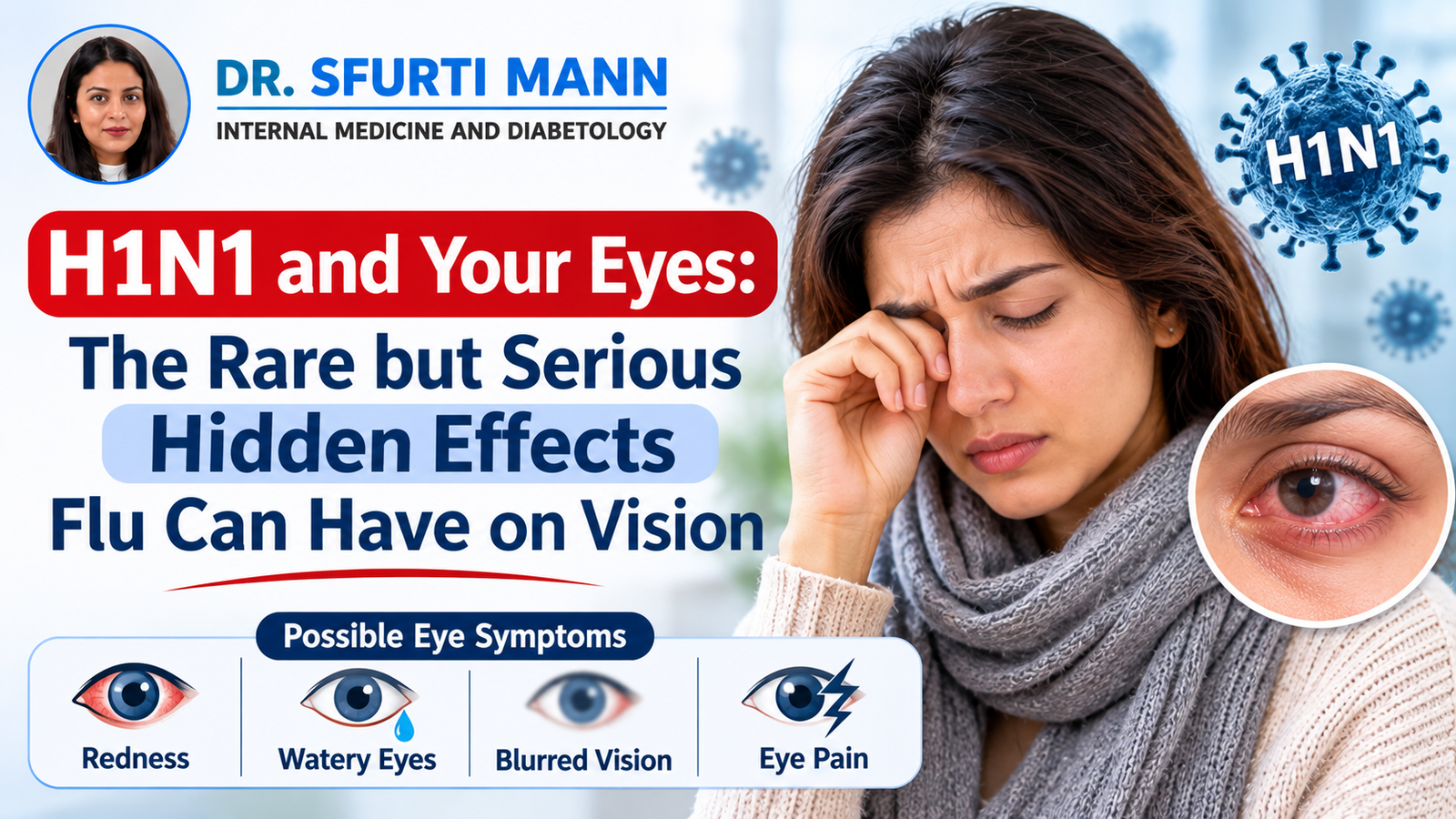
Can H1N1 Affect Your Eyes?
Yes, in some cases. Eye problems linked to H1N1 can happen because of immune-related inflammation, as the body mounts a response to the viral load. The Indian Journal of Ophthalmology has flagged such complications and notes they need prompt medical attention. If they are not treated in time, the problem can progress and treatment can become longer and more difficult.
See a doctor if you notice any of these symptoms:
- Eye pain
- Redness
- Swelling
- Blurred vision
- Sensitivity to light
- Irritation, watering or burning
- Sudden loss of vision
If your eyes are itchy and watery without fever or flu symptoms, an allergy may be the cause. Our page on allergy treatment in Gurgaon can help you tell the difference.
Rare Eye Complications Linked to H1N1
Conjunctivitis, or pink eye. This is the mildest and most common. It can cause redness, watery eyes and irritation. It is easy to dismiss as part of the flu, but your eyes are sensitive and deserve the same care as the rest of your body.
Uveitis. When inflammation affects the middle layer of the eye, it is called uveitis. Symptoms include blurred vision, light sensitivity, eye pain and floaters.
Optic neuritis. This is inflammation of the optic nerve and can occur when the immune response to the virus is strong. Signs include sudden vision loss, blurred vision, reduced colour perception and pain when moving the eye.
Retinal inflammation. Rarely, the retina can be affected. This may cause distorted vision, blind spots and, in serious cases, vision loss.
Neuro-ophthalmic complications. In rare cases the brain pathways that control the eyes are involved. This can lead to abnormal eye movements, double vision and cranial nerve problems.
Warning Signs That Need Immediate Medical Attention
Do not wait for the flu to pass if you have any of these during or after an H1N1 infection:
- Sudden blurred vision
- Double vision
- Eye pain
- Flashes of light
- Dark spots in your vision
- Loss of vision
- Severe headache along with visual symptoms
These signs need a prompt review by a doctor and an eye specialist.
Why Do These Eye Complications Occur?
Several reasons are possible:
- The immune response causes inflammation while it works to reduce the virus
- Cytokine-related damage can occur when the immune system is under strain
- Rarely, the virus may have a direct effect in people with certain underlying vulnerabilities
- A weakened immune system can allow secondary infections that affect the eyes
How Are HH1N1-RelatedEye Problems Diagnosed?
The diagnosis depends on the symptoms and may include:
- A detailed eye examination
- Retinal imaging
- Optical coherence tomography
- Visual field testing
- Neurological evaluation, if needed
Treatment Options
Treatment depends on how severe the problem is and how much of the eye is affected. It can include antiviral medicines, corticosteroids when appropriate, treatment of the underlying inflammation and follow-up with an ophthalmologist. Please do not start steroid eye drops or any other medicine on your own, as the wrong treatment can make an eye condition worse.
How To Lower Your Risk of H1N1 Complications
- Get an annual flu vaccination. It is one of the best protective steps.
- Practise hand hygiene. Read why it matters in our blog on hand hygiene.
- Wear a mask during outbreaks, especially in crowded places.
- Consult a doctor early. Early review can prevent a mild illness from becoming complicated.
- Manage underlying conditions. People with diabetes should be especially careful. Our page on diabetes management and our blog on precautions for diabetes patients during the H1N1 surge explain how. The same goes for patients with asthma, who should keep their treatment up to date during flu season.
Common Questions About H1N1 and Eye Health
Q. Can H1N1 cause pink eye?
Yes. Redness, watering and irritation can occur as part of the immune response to the virus.
Q. How common are serious eye complications with H1N1?
They are rare. Most people with H1N1 do not develop serious eye problems, but any sudden change in vision should be checked at once.
Q. When should I see an eye specialist after H1N1?
See one without delay if you have sudden blurred vision, double vision, eye pain, flashes of light, dark spots or vision loss.
Q. Can I use eye drops at home for red eyes during the flu?
It is best not to self-medicate. Red or painful eyes can have different causes, and the wrong drops can cause harm.
Q. Can the flu vaccine reduce these risks?
An annual flu vaccination lowers your risk of catching influenza and of complications that come with it.
Talk to a Doctor You Can Trust
If you or a family member has flu symptoms along with any change in vision, do not wait. Learn more about Dr. Sfurti Mann, see what patients say about her care or explore her full range of general physician services.
Visit Ananta Health Clinic in Sector 66, Gurgaon or book an appointment today. You can also contact the clinic with any qquestions Early attention protects your eyes and your overall health.
Related reading:
- Five precautions for diabetes patients during the H1N1 surge
- Why hand hygiene matters
- What borderline test results mean
- Silent diabetes symptoms people ignore
- More blogs
References: