
- November 22, 2026
- drsfurtimann
- 0
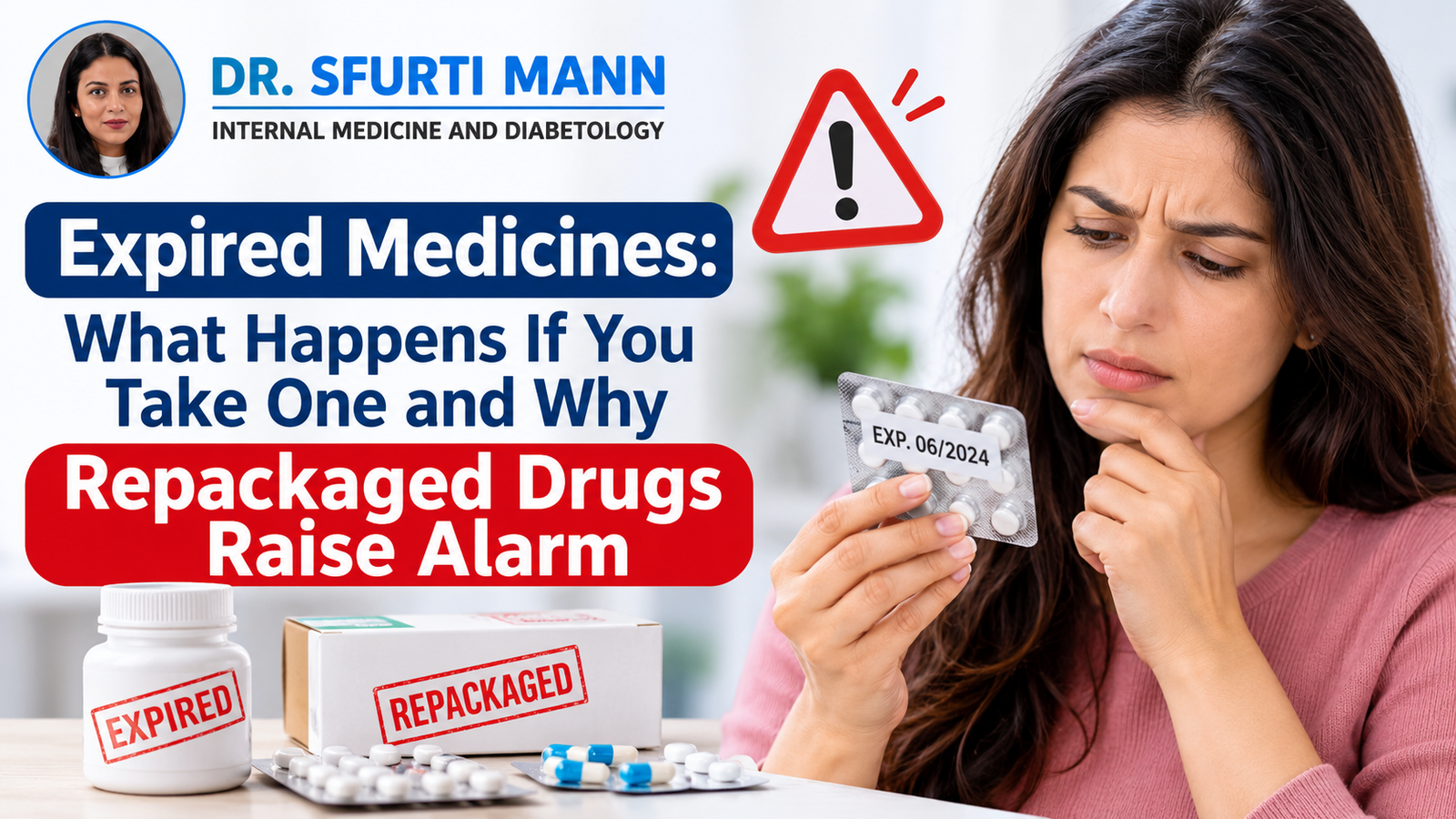
Most of us glance at the expiry date on a medicine strip, if at all. If the tablet looks fine, we assume it is fine. But recent reports of alleged medicine repackaging rackets, including a bust in Bengaluru, have shown why that habit can be risky. Expired medicines are allegedly being collected, repackaged and sold again, and buyers have no reason to suspect anything.
As a general physician in Gurgaon, Dr. Sfurti Mann often hears the same question from patients: is an expired medicine actually harmful? The honest answer is that it depends, and that uncertainty is exactly the problem.
What Does an Expiry Date Really Mean?
An expiry date is the last day the manufacturer guarantees the medicine’s strength, quality and stability, provided it was stored as directed. After that date, nobody can promise the tablet contains the right amount of active drug or that it will work the way it should.
Dr. Sfurti Mann explains that taking an expired medicine does not automatically mean poisoning. In many cases the main issue is reduced potency. However, some medicines can break down or become unsafe over time, and there is no easy way for a patient to tell which is which.
What Happens If You Take an Expired Medicine?
The effect depends on the drug, the formulation, the dose, how long ago it expired and how it was stored. Possible outcomes include:
- No noticeable effect at all
- Reduced effectiveness, so the medicine simply does not work well enough
- Nausea, vomiting or stomach discomfort, which may need attention if it continues, as explained on our gastroenteritis page
- Dizziness, drowsiness or a headache after taking the dose
A single accidental dose usually does not cause immediate harm. The bigger risk is that the medicine fails to do its job when you need it.
Why Loss of Potency Is a Serious Concern
A weaker medicine can delay recovery or leave an illness poorly controlled. For conditions that need steady, reliable treatment, a drug that has lost strength can be more dangerous than a mild side effect.
This matters most for patients on long-term treatment. If you are managing blood sugar, our page on diabetes management explains why consistent medicine quality is central to keeping levels steady. The same applies to anyone on regular medicines for thyroid problems or high cholesterol, where a weakened tablet can quietly let the condition slip out of control.
How Storage Can Change the Risk
The printed date does not tell the whole story. Heat, humidity, direct sunlight and damaged packaging can all speed up deterioration. This is especially relevant in India, where medicines can be exposed to high temperatures during transport and storage.
Some products are more vulnerable than others:
- Liquid medicines and syrups can degrade differently from tablets and capsules
- Eye drops can become contaminated, especially once opened
- Insulin and other temperature-sensitive medicines need controlled storage
Appearance is not a reliable check. A tablet can look perfectly normal and still have lost potency, and a liquid can look clear while its quality is no longer assured.
Medicines That Should Never Be Used Past Expiry
Some treatments depend heavily on correct strength. These should not be relied upon after the labelled date:
- Insulin and other diabetes medicines
- Certain heart medicines
- Antibiotics
- Asthma medicines
- Medicines for epilepsy, stroke prevention and other serious conditions
If you are being treated for an infection such as typhoid, a weak antibiotic can allow the illness to continue and may add to resistance. Patients with asthma should also check inhalers and other medicines regularly, because reliable relief matters during an attack.
Why Repackaged Medicines Are the Real Alarm
An expired strip sitting forgotten in your cabinet is one thing. An expired medicine that is repackaged and sold as new is another. The consumer does everything right by buying from a chemist, yet receives a product that has already crossed its usable life, with unknown storage history.
The expiry date only protects you if you are actually getting the medicine you believe you are buying. That is why checking packaging carefully before use is no longer optional.
What To Do If You Accidentally Take an Expired Medicine
- Do not panic. A single dose rarely causes immediate harm.
- Do not take an extra dose to make up for it.
- Note the medicine name, strength, expiry date and quantity taken.
- Watch for symptoms such as vomiting, dizziness, stomach pain or unusual drowsiness.
- Contact a doctor or pharmacist promptly if a large amount was taken, if the medicine was for a serious condition or if symptoms appear.
Keeping these details ready helps the doctor assess the situation faster and more accurately.
How To Check Your Medicines Before You Buy
- Read the expiry date on the strip, box and bottle every time
- Look for damaged, smudged, altered or mismatched labels
- Check that the strip and the outer box carry the same batch number and dates
- Buy from licensed, trusted chemists and ask for a proper bill
- Store medicines away from heat, moisture and sunlight
- Clear out expired medicines at home instead of keeping them for later
If something looks suspicious, do not use it. Report it to your chemist or doctor.
Common Questions About Expired Medicines
Q. Can an expired medicine kill you?
It is unlikely that a single expired dose is fatal, but the safety of the medicine can no longer be assured. The greater danger is that a critical medicine, such as insulin or a heart drug, may not work when needed.
Q. Is it safe to take a tablet a few days after expiry?
Even a short delay removes the manufacturer’s guarantee. Doctors advise against deliberately using expired medicines, especially prescription drugs.
Q. Do expired medicines look different?
Not always. Many lose potency without any visible change in colour, smell or texture.
Q. Can expired eye drops or syrups be harmful?
They carry a higher risk of contamination and degradation than tablets, so they should be discarded after expiry or after the recommended period once opened.
Talk to a Doctor You Can Trust
If you have taken an expired medicine, are unsure about a medicine you bought or want a review of your long-term prescriptions, a quick consultation can prevent bigger problems. Learn more about Dr. Sfurti Mann and her experience in internal medicine, read what patients say about her care or explore her full range of general physician services.
Visit Ananta Health Clinic in Sector 66, Gurgaon or book an appointment today. You can also contact the clinic directly with any questions. Your medicines should protect your health, and a few minutes of checking can make sure they do.
Reference: https://www.indiatoday.in/health/story/expired-medicines-what-happens-if-you-take-one-amid-bengaluru-repackaging-racket-2994170-2026-09-14