
- August 17, 2026
- drsfurtimann
- 0
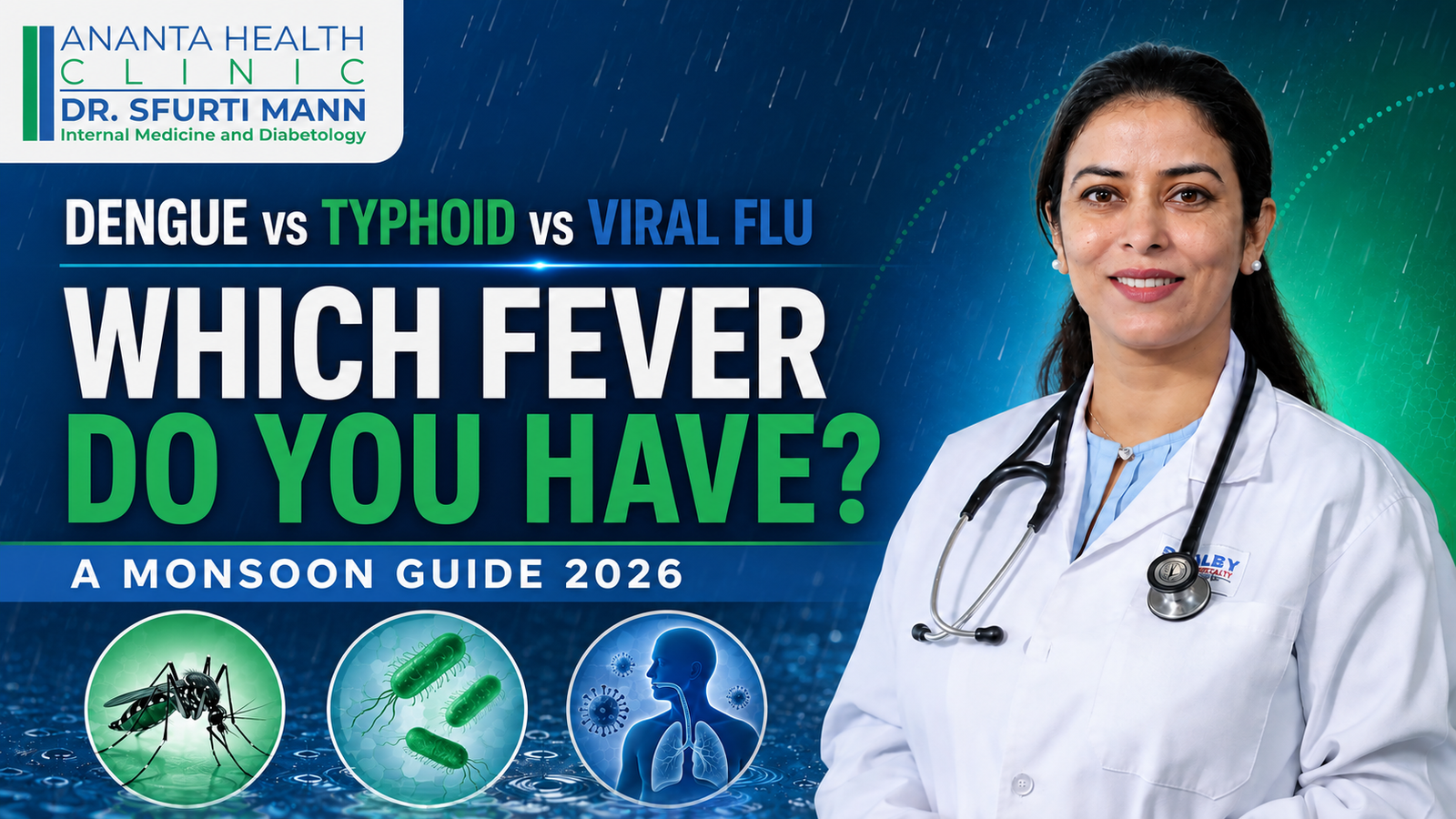
Monsoon brings a rise in several infections, and dengue, typhoid and seasonal viral flu can all begin with fever. So how can you tell them apart?
Dengue fever is caused by Dengue virus and is transmitted by bite of Aedes mosquitoes.
It commonly causes sudden high fever, severe body and joint aches, headache, pain behind the eyes, nausea and sometimes a rash. It usually has 3 phases- a) Febrile or Fever phase b) Critical Phase c) Recovery Phase , total duration lasting approximately 10days.
Platelet counts may fall during the illness, but a low platelet count alone does not diagnose dengue. Warning signs such as persistent vomiting, abdominal pain, bleeding, extreme weakness or restlessness require urgent medical attention.
Typhoid fever spreads mainly through contaminated food and water. The fever is step ladder pattern, that is it climbs gradually over several days and by second week reaches a continuous high plateau. Fever may be persistent and accompanied by weakness, headache, abdominal discomfort, loss of appetite, constipation or diarrhoea. Untreated Typhoid can cause gastrointestinal and other organ complications in 2nd and 3rd weeks. Unlike most viral fevers, typhoid is a bacterial infection and may require appropriate antibiotics based on clinical assessment and, when possible, culture testing.
Seasonal viral flu/influenza typically presents with fever, chills, cough, sore throat, headache, marked body aches and fatigue. Respiratory symptoms are usually much more prominent than in dengue or typhoid. Influenza can circulate throughout the year in tropical regions, including India.
Treatment is mostly symptomatic.
Patients with warning symptoms and those with low immunity, elderly age group, infants, uncontrolled diabetes need to be more cautious and should seek early medical attention.
The important takeaway: Fever pattern & symptoms alone can only give a clue, they cannot reliably identify the infection. Depending on symptoms, duration and local circulation, your doctor may recommend tests such as CBC, dengue NS1/IgM, blood culture or influenza testing.
During monsoon:
1) Focus on safe drinking water
2) Food hygiene
3) Mosquito-bite prevention
4) Hand hygiene and
5) Appropriate vaccination
Most importantly, don’t start antibiotics simply because you have fever.
The right diagnosis leads to the right treatment. Consult your doctor for the right advise for you.