
- May 19, 2026
- drsfurtimann
- 0
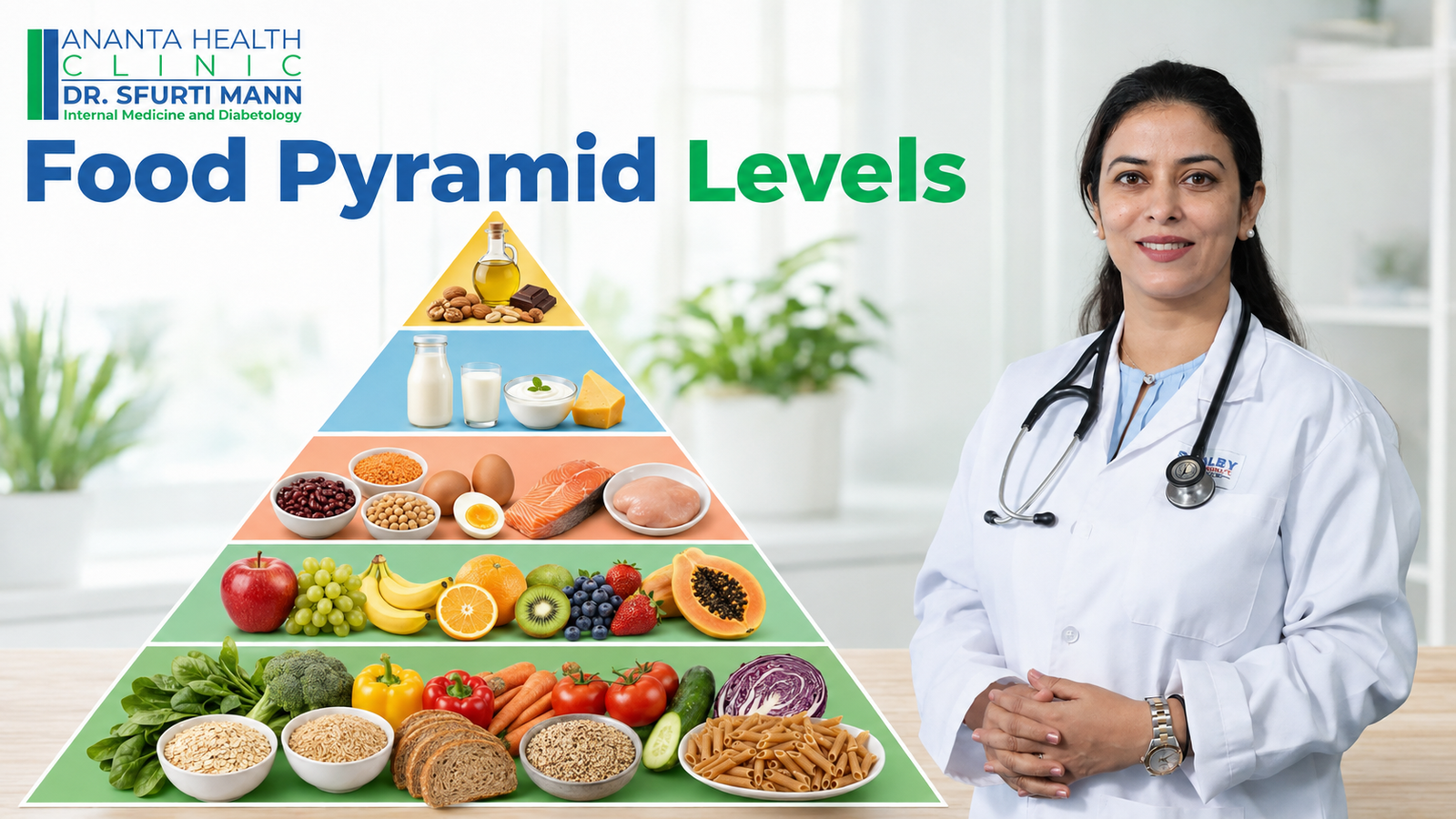
The food pyramid is now divided into 3 levels:
- Level 1 (Highest priority): proteins, full-fat dairy, and traditional fats.
- Level 2 (Medium priority): whole fruits and vegetables.
- Level 3 (Lowest priority): grains.
Excluded elements: added sugars, white flours, and ultra-processed products are no longer part of the structure, as they are considered harmful rather than optional.
This new inverted pyramid model represents a paradigm shift toward metabolic health, moving carbohydrates away from the foundation of the diet and prioritizing nutrient density and satiety instead.
What changed in the food pyramid?
The most notable changes in the new food pyramid include:
1. A new visual framework
The new food pyramid is intentionally inverted to reflect updated dietary priorities. Foods recommended in larger amounts are now displayed at the top of the pyramid, while foods to be eaten more sparingly appear at the narrow base.
Protein, dairy, and vegetables occupy the widest portion at the top, signaling that these foods should make up the majority of daily intake. Grains, which previously formed the foundation of older models, have been moved to the smallest section at the bottom, reflecting a reduced emphasis on carbohydrate-heavy diets.
2. Increased amount of protein
One of the most notable changes is the increase in recommended protein intake. The new guidelines advise 1.2–1.6 grams of protein per kilogram of body weight per day, compared with the previous recommendation of 0.8 grams.
The guidelines adopt a source-neutral approach, encouraging both animal-based proteins, such as red meat, eggs, poultry, and seafood, and plant-based sources like beans and lentils. A “protein first” approach is recommended at meals to support satiety, muscle maintenance, and metabolic health.
3. Inclusion of full-fat dairy and traditional oils
The 2025–2030 guidelines move away from decades of low-fat messaging. Full-fat dairy products, including whole milk and full-fat cheese, are now endorsed, with a recommendation of up to three servings per day.
Traditional fats such as butter and beef tallow are included as acceptable fat sources, while the guidance discourages reliance on highly processed seed oils. Despite these changes, the guidelines maintain an overall limit of no more than 10% of total daily calories from saturated fat.
4. Limiting added Sugars and ultra-processed foods
The new guidelines take a firm stance on added sugars and ultra-processed foods. Added sugar is limited to no more than 10 grams per meal, and the guidance states that no amount of added sugar is considered part of a healthy diet, particularly for children.
There is a strong emphasis on avoiding packaged, ready-to-eat snacks, petroleum-based artificial dyes, and non-nutritive sweeteners. The focus is on whole, minimally processed foods prepared at home whenever possible.
5. Reducing grains
Grain recommendations now prioritize quality over quantity. Refined carbohydrates such as white bread and flour tortillas are discouraged, while 2 to 4 daily servings of fiber-rich whole grains are recommended.
6. Maintaining fruits and vegetables
Vegetables and fruits remain central to the diet, with a daily goal of three servings of vegetables and two servings of fruit. Whole forms, such as fresh or frozen produce, are preferred over juices.
The guidelines also introduce greater attention to gut health, highlighting the role of fermented foods in supporting the microbiome.